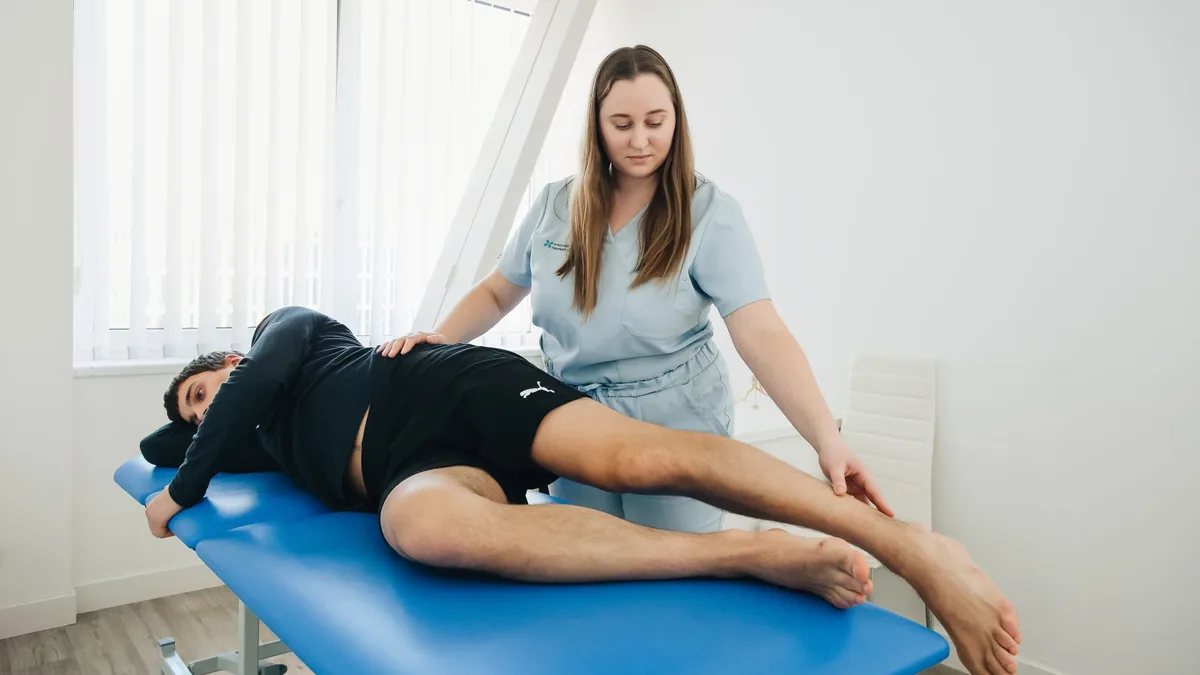
Physiotherapy appointments can feel short. You arrive, try to remember when the knee pain started and what makes it worse, do a few movements, get a sheet of exercises and leave thinking of all the questions you meant to ask. Then, a fortnight later, you realise you’re not sure you’ve been doing the exercises right.
AI can help you get far more out of each session. It can help you describe your symptoms clearly, keep a simple pain and activity diary, prepare questions, and turn your physio’s instructions into a routine you’ll actually stick to. It must never replace your physiotherapist’s assessment or advice, and it can’t diagnose your problem. This guide takes about 20 minutes before an appointment.
Quick answer: Before your appointment, note when the problem started, what makes it better or worse, how it affects daily life and what you’ve tried. Ask an AI chatbot to turn your notes into a short, clear summary and a list of questions for your physiotherapist. Afterwards, ask it to turn your exercise sheet into a simple daily routine and tracker. Follow your physio’s advice and contact them or NHS 111 if symptoms worsen.
What you’ll need
- Notes on your symptoms and how they’ve changed
- Any medication you’re taking and relevant medical history
- Your exercise sheet or notes from previous sessions
- An AI chatbot and about 20 minutes
- Comfortable clothes for the appointment
Step-by-step: prepare for physiotherapy with AI
- Write down your story. When did it start? Was there an injury? What makes it better or worse? What can’t you do that you could before? Rough notes are fine.
- Turn it into a clear summary. Ask the AI to organise your notes into a short summary you can read out or hand over (prompt 1).
- Keep a quick symptom diary. For a week before, note pain levels, stiffness and activities each day. Patterns help your physio.
- Prepare your questions. Ask the AI for questions worth asking (prompt 2): what’s likely going on, what to avoid, how long recovery might take and when to get back to sport or work.
- Take notes during the session. Or ask if you can record instructions on your phone. Ask your physio to show you exercises and check your technique.
- Turn exercises into a routine. Afterwards, ask the AI to turn your exercise sheet into a simple daily plan and tracker (prompt 3). Linking exercises to a daily habit helps.
- Track progress for next time. Before your follow-up, ask the AI to summarise your diary and any concerns (prompt 4).
Copy-paste prompts
1. Summarise my symptoms
I have a physiotherapy appointment for [BODY PART OR PROBLEM]. Here are my notes: [WHEN IT STARTED, CAUSE IF KNOWN, WHAT MAKES IT BETTER OR WORSE, PAIN LEVELS, HOW IT AFFECTS DAILY LIFE, WHAT I'VE TRIED, MEDICATION, RELEVANT HISTORY].
Organise this into a clear summary of under 200 words with headings that a physiotherapist would find useful. Don't suggest a diagnosis.
2. Questions for my physio
I'm seeing a physiotherapist about [PROBLEM]. My goals are [GOALS, SUCH AS RUNNING AGAIN OR LIFTING MY GRANDCHILDREN]. My worries: [WORRIES].
Suggest 10 useful questions to ask, covering what might be causing it, what I should and shouldn't do, how much pain is okay during exercises, how long recovery might take, and warning signs that mean I should get help quickly.
3. Turn my exercise sheet into a routine
My physiotherapist gave me these exercises: [PASTE EXERCISES WITH SETS, REPS AND FREQUENCY]. My day usually looks like: [ROUTINE].
Turn this into a simple daily routine that fits my day, with a tick-box tracker for two weeks. Keep the exercises, sets and reps exactly as my physio wrote them. Don't add or change any exercises.
4. Prepare for my follow-up
Here's my diary since my last physio appointment: [PASTE NOTES ON PAIN, EXERCISES DONE, ACTIVITIES]. Questions or concerns: [LIST].
Summarise how things have gone in under 150 words for my physio, highlight changes since last time, and list my questions clearly.
Recommended tools
- Claude: calm, clear summaries and routines.
- ChatGPT: good for question lists and trackers.
- Gemini: handy for setting exercise reminders in Google Calendar.
- Grok: quick for organising notes on your phone.
- NHS: trusted information on physiotherapy and how to access it.
Tips and mistakes to avoid
- Never change your exercises based on AI. Follow your physiotherapist’s programme and ask them if you’re unsure.
- Don’t self-diagnose. AI might suggest conditions that worry you unnecessarily or miss something important.
- Be honest about doing exercises. Your physio can only adjust the plan if they know what you’ve actually done.
- Wear the right clothes. Your physio may need to see the area.
- Know the warning signs. Get urgent help for severe pain, numbness, weakness or loss of bladder or bowel control.
- Keep personal details private. You don’t need to share your name or NHS number with AI.
- Check how to access physio. In some areas you can refer yourself on the NHS; check with your GP or local service.
FAQ
Can I refer myself to an NHS physiotherapist?
In many areas, yes. Check with your GP surgery or search for your local NHS physiotherapy service.
Can AI tell me which exercises to do?
It can explain general ideas, but for an injury or condition, follow a physiotherapist’s assessment and programme.
How often should I do my exercises?
Exactly as your physio advises. If the instructions aren’t clear, ask at your next appointment or call the service.
What if the exercises make my pain worse?
Mild discomfort can be normal, but pain that’s sharp, keeps increasing or lasts long after exercising isn’t something to push through. Stop that exercise and contact your physiotherapist for advice.
Try it yourself with Claude
I have a physiotherapy appointment for [BODY PART OR PROBLEM]. Here are my notes: [WHEN IT STARTED, CAUSE IF KNOWN, WHAT MAKES IT BETTER OR WORSE, PAIN LEVELS, HOW IT AFFECTS DAILY LIFE, WHAT I'VE TRIED, MEDICATION, RELEVANT HISTORY].
Organise this into a clear summary of under 200 words with headings that a physiotherapist would find useful. Don't suggest a diagnosis.
Get the free AI Agents Playbook
50 practical AI workflows, plus one practical how-to a week in your inbox.
Free. No spam. Unsubscribe any time.
Related guides
- How to use AI to prepare for a doctor’s appointment
- How to use AI to start a home yoga or stretching routine
- How to use AI to plan workouts for Over-50s
Reference: NHS: Physiotherapy