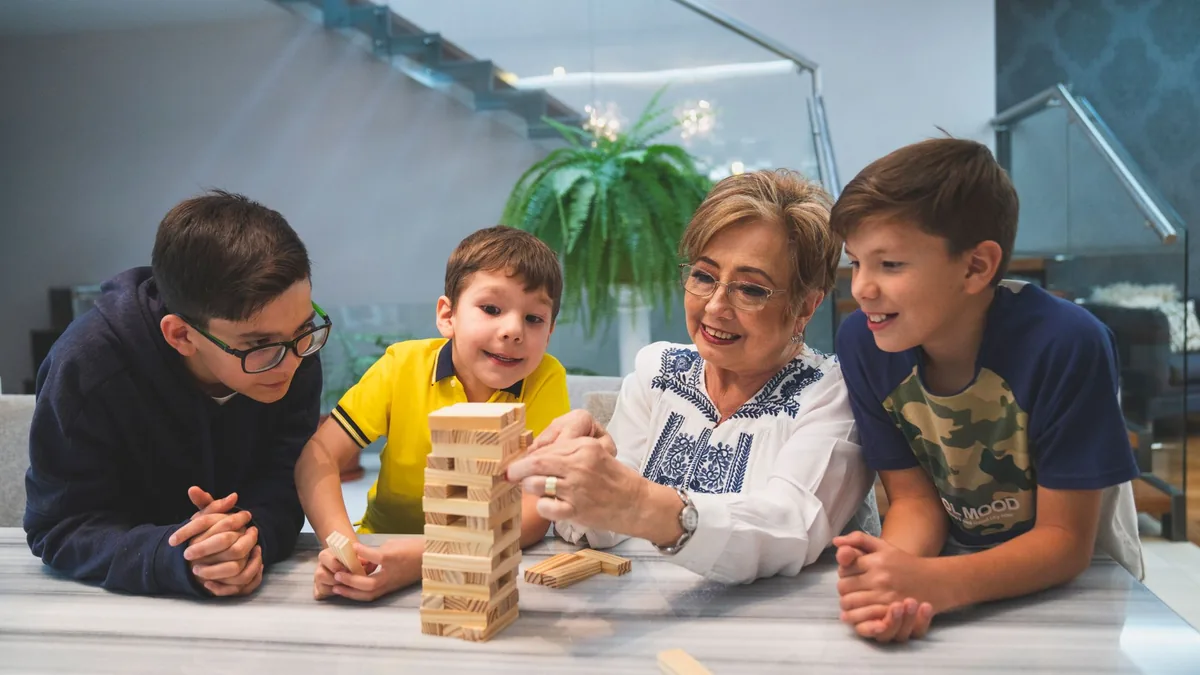
Every family has the same moment on Christmas Day. Lunch is over, the presents are open, half the room wants to doze and the children are bouncing off the walls. A couple of good games can bring everyone back together, but picking ones that work for a four-year-old, a teenager and an 84-year-old at the same time is harder than it sounds.
This is where an AI chatbot is genuinely useful. Tell it who’s coming, their ages, how much room you have and what’s in the cupboard, and it can pick Christmas games for the family that everyone can join in with, put them in a sensible order, write the charades cards and explain the rules in one short paragraph. This guide takes about 20 minutes, and you’ll finish with a printed plan, a stack of game cards and a back-up game for when energy dips.
Quick answer: Give an AI chatbot the ages of everyone playing, any mobility, hearing or reading needs, the space you have and what you’ve got at home (paper, pens, a pack of cards, sticky notes). Ask it for a 60–90 minute running order that mixes seated and active games, with teams that balance ages, and then ask it to write the cards and the rules. The best family games need almost no kit: Who Am I?, charades, picture-drawing games and simple card games like Chase the Ace.
New to AI? Start with our beginner’s guide.
What you’ll need
- A list of who’s playing, with ages and anything that matters (a toddler who can’t read yet, a grandparent who’s hard of hearing or prefers to stay seated)
- An idea of the space: a living room with the sofa, a dining table, or room to move about
- What you already have: paper, pens, sticky notes, a pack of cards, a timer on your phone, a speaker for music
- A printer, or a few sheets of card and a thick pen to write cards by hand
- An AI chatbot such as ChatGPT, Claude, Gemini or Grok
- About 20 minutes, ideally a day or two before
Step-by-step: plan Christmas games with AI
- Describe your group honestly. List everyone by age and add one line on anything that affects play: “can’t read yet”, “hard of hearing”, “doesn’t like performing”, “very competitive”. You don’t need names. This is the single thing that makes the plan fit your family rather than a generic list (prompt 1).
- Set the time, space and kit. Say how long you want to play (60–90 minutes is plenty after a big meal), which room you’ll use and what you have. Ask the AI to use only those things, so you aren’t sent to the shops on Christmas Eve.
- Ask for a running order, not just ideas. A good session starts with an easy seated game, has one active game in the middle and finishes with something calm. Ask for timings and for who sits out or takes a special role in each game.
- Make the teams fair. Ask the AI to split players into teams that mix ages, so the grown-ups aren’t all on one side. Pair the youngest child with an adult as a “team captain” so they can join in with every round.
- Get the cards written. Charades, Who Am I? and picture games need lists of words. Ask for cards at three levels, with easy ones a young child can act or draw, and ask it to include a few family in-jokes or favourite films you mention (prompt 2).
- Print one-paragraph rules. Ask the AI to explain each game in three or four short sentences, in large print, so whoever is hosting doesn’t have to remember everything (prompt 3).
- Have a back-up. Ask for one extra game that needs nothing at all, for when the youngest gets tired or people drift off, and a printable Christmas bingo or treasure hunt the children can do on their own (prompt 4).
- Do a quick check. Read the plan through. Remove anything that involves candles, small parts near a toddler, or running in a crowded room, and swap any card that might upset someone.
Copy-paste prompts
1. A Christmas games plan for our family
I'm planning games for Christmas Day at home. Here's who's playing:
[LIST EACH PERSON WITH AGE AND ANY NOTES, E.G. "GRAN, 81, HARD OF HEARING, PREFERS TO STAY SEATED" / "CHILD, 4, CAN'T READ YET"]
We'll play in [ROOM] for about [MINUTES] minutes after [LUNCH / TEA]. We have: [WHAT YOU HAVE, E.G. PAPER, PENS, STICKY NOTES, A PACK OF CARDS, A SPEAKER].
Suggest 5 or 6 games that everyone can join in with, using only what we have. Put them in a running order with timings, starting seated, with one active game in the middle and a calm finish. For each game, say how it works in one sentence, how to include the youngest and oldest players, and any team split that mixes ages fairly. Use British English.
2. Charades, Who Am I? or picture cards at three levels
Write [NUMBER] cards for [CHARADES / WHO AM I? / A DRAWING GAME] for a family Christmas.
Split them into three levels: easy (things a [AGE]-year-old who can't read could act or draw, like animals or Christmas objects), medium (Christmas films, songs and characters most people know) and hard (for teenagers and adults).
Include a few of our family favourites: [FILMS, SONGS, PETS OR IN-JOKES]. Nothing scary, rude or likely to upset anyone. Format them as a list I can print and cut out, with the level in brackets after each card.
3. Simple rules everyone can follow
Explain the rules of these games: [LIST GAMES]. For each one, write no more than four short sentences that a 9-year-old and a grandparent would both understand, then add one line on how to make it easier for a young child and one line on how to play it seated. Make it suitable to print in large type on one page.
4. A printable Christmas bingo or treasure hunt
Make a Christmas Day [BINGO CARD / TREASURE HUNT] for [NUMBER] children aged [AGES].
For bingo: a 4x4 grid of things they might see, hear or do on Christmas Day (for example "someone says 'Merry Christmas'", "a cracker joke", "a robin on the TV"), with a different order on each card.
For a treasure hunt: [NUMBER] short rhyming clues that lead around [ROOMS OR PLACES IN OUR HOME], ending at [WHERE THE PRIZE IS]. Keep the clues easy enough for a [AGE]-year-old with a little help, and list the order I need to hide them in.
Example: a plan for a family of eight
Here’s an example of the kind of plan prompt 1 gives you for a family of eight: Gran (81, hard of hearing, stays seated), Grandad (84), two parents in their 40s, an aunt (38), and children aged 4, 9 and 13, playing in the living room for about 90 minutes after lunch, with paper, pens, sticky notes, a pack of cards and a speaker:
- Who Am I? (10 minutes, seated). Everyone writes a famous name or Christmas character on a sticky note and sticks it on the forehead of the person to their left, who asks yes/no questions. The 4-year-old pairs with a parent and gets an animal. Gran can read the notes and doesn’t need to hear long answers.
- Christmas picture game (20 minutes, seated, two teams). One person draws a word from the card pile while their team guesses. Team A: Gran, the 13-year-old, Dad. Team B: Grandad, the 9-year-old, Mum, the aunt, with the 4-year-old as a “helper” for both teams. Drawing on big sheets so Gran can see from her chair works well, and it doesn’t rely on hearing.
- Musical statues (10 minutes, active). The children and anyone else who wants to dance; Grandad runs the music and Gran is the judge. This is the energy break in the middle.
- Charades with films and songs (20 minutes). Same teams. The 4-year-old acts easy cards (a reindeer, a snowman) with a whispered hint. Act facing Gran and use clear gestures.
- Chase the Ace (15 minutes, seated). A simple card game where everyone gets one card and decides whether to keep it or swap it; the lowest card loses a life. It’s quick to learn, it works for 3 to 10 players and the 4-year-old can play with help.
- Would You Rather, Christmas edition (10 minutes, calm finish). Read out silly questions (“Would you rather eat sprouts for breakfast or wear a tinsel hat all day?”) and everyone points. No winners, so nobody ends the day upset.
A plan like this may also suggest writing each game’s name on a card so Gran can follow along, and having a bowl of small chocolates as prizes for everyone, not only the winners.
Then make it yours: if your living room is small, you might swap musical statues for “pass the sticky note”, and add a couple of your own family’s favourite films to the charades cards. That’s the point of the plan. It gives you a solid running order in seconds, and you then fit it to your room and your family.
Recommended tools
- ChatGPT: quick at a full running order and at turning it into printable cards and rules
- Claude: good at balancing teams fairly and at writing gentle, clear rules for players with different needs
- Gemini: handy if you want the cards in Google Docs or a bingo grid in Google Sheets ready to print
- Grok: useful for a fast batch of extra charades cards or silly Would You Rather questions
If you’d rather run a proper quiz round, our guide to writing a Christmas quiz with AI shows how to get questions at the right level for each team. Games are also a good way to fill the long evenings when people stay for a few days, so they fit nicely into our guide to hosting Christmas guests who are staying over, and a short games session can take the edge off a busy day, as we explain in planning a calmer Christmas with AI.
Tips and mistakes to avoid
- Start seated and short. After a big meal, nobody wants to leap up straight away. Begin with a game played from the sofa and keep each round to 10–20 minutes.
- Give everyone a role. Not everyone likes performing. Scorekeeper, timekeeper, DJ and judge are proper jobs, and they keep grandparents and shy teenagers involved.
- Play to the youngest and the oldest. If a game only works for confident readers or people who can hear every word, change it or drop it. Picture games and acting games suit most mixed groups.
- Skip anything risky. Leave out games with candles or flames, small parts within reach of toddlers, and running in a room full of drinks and tree decorations.
- Check the cards. AI can include films or characters that are too scary for young children or that mean something sensitive to your family. Read every card before you print.
- Small prizes for everyone. A bowl of chocolates or a “best effort” award stops the competitive ones from taking over and keeps the mood light.
- Keep personal details out. You don’t need names, health details or your address to get a good plan. “Grandparent, 81, prefers to stay seated” is enough.
FAQ
What are good Christmas games for all ages?
Games that need little reading or hearing work best for mixed ages: Who Am I? with sticky notes, charades, a drawing game in teams, musical statues and simple card games like Chase the Ace. Pair young children with an adult, and give anyone who’d rather not play a role such as scorekeeper or judge.
What games can you play at Christmas with no equipment?
Charades, Twenty Questions, Would You Rather, I Spy, Who Am I? (with paper or sticky notes) and a “the minister’s cat” style alphabet game need nothing more than paper and a pen. Ask the AI for a list using only what you have at home and it will suggest games that need no kit.
What are traditional Christmas parlour games?
Many of today’s family favourites are old. The National Trust notes that Victorian Christmas house parties included games such as charades and musical chairs, and storytelling around the fire goes back much further. You can ask the AI to explain how to play a traditional game and to adapt it for your group.
Try it yourself with ChatGPT
I'm planning games for Christmas Day at home. Here's who's playing:
[LIST EACH PERSON WITH AGE AND ANY NOTES, E.G. "GRAN, 81, HARD OF HEARING, PREFERS TO STAY SEATED" / "CHILD, 4, CAN'T READ YET"]
We'll play in [ROOM] for about [MINUTES] minutes after [LUNCH / TEA]. We have: [WHAT YOU HAVE, E.G. PAPER, PENS, STICKY NOTES, A PACK OF CARDS, A SPEAKER].
Suggest 5 or 6 games that everyone can join in with, using only what we have. Put them in a running order with timings, starting seated, with one active game in the middle and a calm finish. For each game, say how it works in one sentence, how to include the youngest and oldest players, and any team split that mixes ages fairly. Use British English.
Try the next prompt: planning the days after Christmas too? See how to plan Christmas holiday childcare and activities with AI
Read next
Get the free AI Agents Playbook
50 practical AI workflows, plus one practical how-to a week in your inbox.
Free. No spam. Unsubscribe any time.
Reference: National Trust: Christmas traditions from history