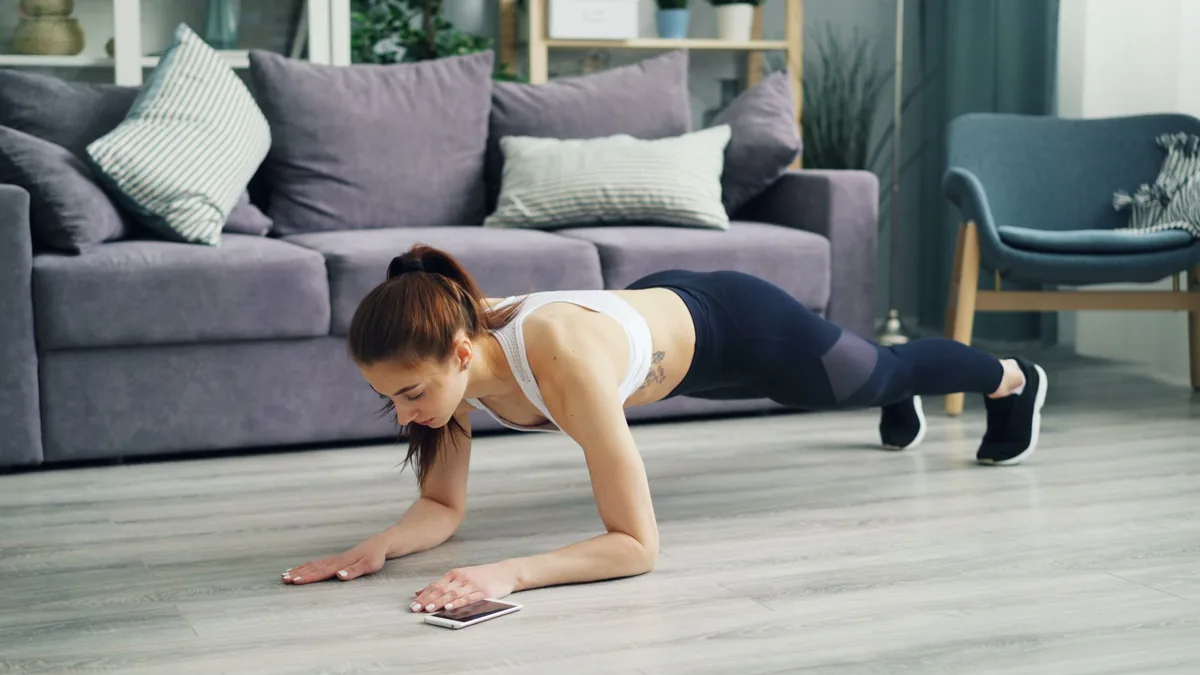
When the clocks go back, it gets much harder to stay active. It’s dark when you leave work, the weather is grim and the gym suddenly feels very far away. Many people who were doing well in the summer quietly stop moving until spring.
A home workout routine solves most of that, and AI makes it easy to build one that fits your space, your fitness and the time you really have. You can ask for short sessions with no equipment, quiet workouts for flats, and a plan that gets a little harder each week. This guide takes about 30 minutes to set up, and the routines themselves can be as short as 15 minutes.
Quick answer: Tell an AI chatbot your fitness level, how much space and kit you have, how many days you can train and for how long, plus any injuries. Ask for a four-week winter home plan with warm-ups, simple strength and cardio moves, and easier swaps. Start gently, follow the NHS activity guidelines and stop if anything hurts.
New to AI? Start with our beginner’s guide.
What you’ll need
- A clear space about the size of a yoga mat
- Comfortable clothes and trainers (or bare feet on a mat)
- Optional kit: a mat, resistance band or a couple of water bottles as weights
- An AI chatbot such as ChatGPT, Gemini, Claude or Grok
- Your calendar to block out sessions
- About 30 minutes to plan
Step-by-step: plan a winter home workout with AI
- Be honest about your starting point. Tell the AI how active you are now, your age range, any health conditions or injuries, and what you enjoy or hate.
- Describe your space and time. Mention if you live in a flat and need quiet moves, how much room you have, and whether you can do 15, 20 or 30 minutes (prompt 1).
- Ask for a four-week plan. Request three to four sessions a week that mix strength, cardio and mobility, with a warm-up and cool-down each time. The NHS suggests adults aim for 150 minutes of moderate activity a week, plus strength work on at least two days.
- Get easier and harder versions. Ask for a beginner swap and a progression for each exercise so you can adjust on the day (prompt 2).
- Check how to do each move. Ask for simple form cues, then watch a demonstration from a reputable source if you’re unsure.
- Fit it into dark evenings. Ask the AI to schedule sessions around your week, such as straight after work before you sit down (prompt 3).
- Review every week. Tell the AI how it went and ask it to adjust the next week (prompt 4).
Copy-paste prompts
1. Build my winter home plan
Create a 4-week home workout plan for winter. About me: [AGE RANGE], currently [ACTIVITY LEVEL], [ANY INJURIES OR CONDITIONS]. I have [SPACE] and [KIT, OR NO EQUIPMENT]. I can train [NUMBER] days a week for [MINUTES] minutes. I live in a flat, so keep jumping to a minimum.
Include a 5-minute warm-up and cool-down for each session, a mix of strength, cardio and mobility, and make each week slightly harder. Present it as a table.
2. Give me easier and harder options
For each exercise in this plan: [PASTE PLAN], give me an easier version, the normal version and a harder version, plus 2 short form cues for each. Flag any exercise that may not suit someone with [CONDITION, E.G. KNEE PAIN].
3. Fit workouts into my week
Here is my usual week: [DESCRIBE WORK HOURS, SCHOOL RUN, EVENINGS]. Suggest the best times for 3 to 4 short home workouts, and give me one 10-minute backup session for busy days.
4. Adjust next week’s plan
Last week I did [WHAT YOU COMPLETED]. It felt [TOO EASY, ABOUT RIGHT, TOO HARD], and [ANY ACHES OR PROBLEMS]. Adjust next week's sessions accordingly and keep them under [MINUTES] minutes.
Recommended tools
- ChatGPT: builds clear weekly plans and tables, and voice mode can talk you through a session.
- Gemini: can add sessions straight to Google Calendar and set reminders.
- Claude: good at gentle, sensible plans for beginners and returners.
- Grok: quick ideas for fun, varied sessions when you’re bored of the same routine.
For a full plan around your goals, see how to create a workout plan with AI, and on rest days try our guide to starting a home yoga or stretching routine. To keep the habit going through January, read how to track habits and stay motivated with AI, and when the weather clears, build some fresh air back in with an AI step-count and walking plan.
Tips and mistakes to avoid
- Start easier than you think. It’s better to finish a session wanting more than to be too sore to train again.
- Warm up properly. Cold muscles and cold rooms are a bad mix, so never skip the warm-up.
- Mention health conditions. If you have a heart condition, are pregnant, or have joint problems, check with your GP or a physiotherapist first.
- Stop if it hurts. Sharp pain, chest pain or dizziness means stop and seek advice.
- Keep it visible. Leave your mat out and lay out your kit the night before.
- Don’t trust every number. AI can suggest unrealistic reps or timings, so adjust to how you feel.
FAQ
Can I get fit with home workouts alone?
Yes. Bodyweight exercises, a band and some regular cardio can build strength and fitness, especially if you increase the challenge gradually.
How long should a home workout be?
Even 15 to 20 minutes counts. Consistency matters more than length.
Is it safe to follow an AI workout plan?
For most healthy adults, a gentle plan is fine, but AI isn’t a coach or doctor. Check with a professional if you have health concerns.
What can I do on days I’m short of time?
Ask the AI for a 10-minute backup session, or go for a brisk walk in your lunch break.
Try it yourself with ChatGPT
Create a 4-week home workout plan for winter. About me: [AGE RANGE], currently [ACTIVITY LEVEL], [ANY INJURIES OR CONDITIONS]. I have [SPACE] and [KIT, OR NO EQUIPMENT]. I can train [NUMBER] days a week for [MINUTES] minutes. I live in a flat, so keep jumping to a minimum.
Include a 5-minute warm-up and cool-down for each session, a mix of strength, cardio and mobility, and make each week slightly harder. Present it as a table.
Get the free AI Agents Playbook
50 practical AI workflows, plus one practical how-to a week in your inbox.
Free. No spam. Unsubscribe any time.
Related guides
- How to use AI to build a better sleep routine
- How to use AI to build habits that help you manage stress
- How to use AI to plan healthy meal prep for the week
Reference: NHS: Physical activity guidelines for adults aged 19 to 64