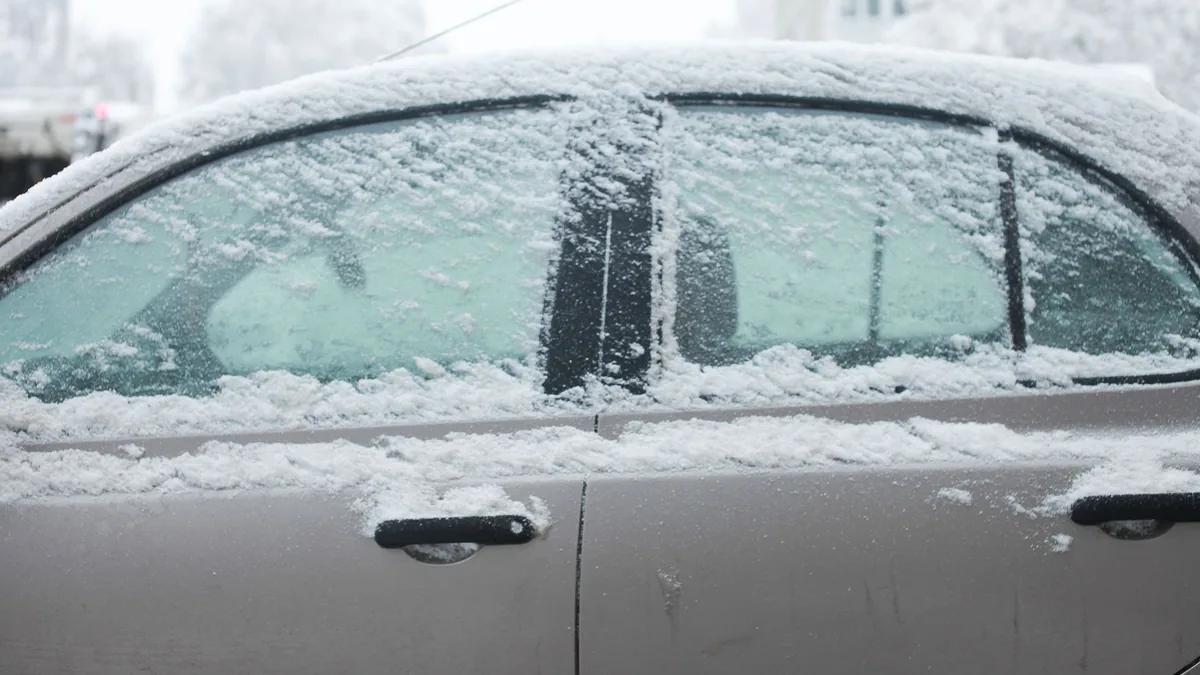
The first frosty morning always seems to catch someone out: a flat battery, an empty screenwash bottle or a windscreen that takes 15 minutes to clear. Winter is also when breakdown services have their busiest days, and many of those call-outs could have been avoided with a ten-minute check at the weekend.
You don’t need to be a mechanic. AI can turn your car’s make, model and age into a simple checklist written in plain English, tell you where to find things like the screenwash filler and the tyre pressure label, and help you pack a sensible emergency kit. This guide takes about 30 minutes, including the check itself.
Quick answer: Tell an AI chatbot your car’s make, model, year and fuel type, and ask for a plain-English winter checklist covering tyres, battery, lights, wipers, screenwash, oil and coolant. Then ask it to build an emergency kit list and a plan for icy journeys. Check anything safety-critical against your car’s handbook or a garage.
New to AI? Start with our beginner’s guide.
What you’ll need
- Your car’s make, model, year and fuel type (petrol, diesel, hybrid or electric)
- The owner’s handbook, or the manufacturer’s online version
- A torch, a tyre tread gauge or a 20p coin, and a tyre pressure gauge if you have one
- An AI chatbot such as ChatGPT, Claude, Gemini or Grok
- About 30 minutes on a dry day
Step-by-step: winter-proof your car with AI
- Get a checklist for your car. Give the AI your car’s details and ask for a step-by-step winter checklist, including where to find each item (prompt 1).
- Do the walk-round. Work through the list: tyre tread and pressure, all lights, wiper blades, screenwash, oil, coolant and any warning lights on the dashboard.
- Ask about anything odd. If something looks wrong, such as a dashboard light or a cracked wiper, describe it or upload a photo and ask what it means and how urgent it is (prompt 2).
- Check the battery. Batteries often fail on the first cold morning. If yours is more than four or five years old or the engine is slow to start, ask a garage to test it.
- Pack an emergency kit. The Highway Code suggests de-icer, an ice scraper, a torch, warm clothes and boots, a first aid kit, jump leads, a shovel, a warm drink and food. Ask the AI to tailor the list to your trips (prompt 3).
- Plan icy journeys. The Highway Code (rule 228) says you should not drive in icy or snowy weather unless your journey is essential. Before a longer winter drive, ask the AI for a checklist covering the forecast, route, timings and what to do if you get stuck (prompt 4).
- Book anything you can’t fix. Put a garage visit, MOT or service date in your calendar, along with your breakdown cover details.
Heading home for Christmas by train instead? See how to plan Christmas train travel around engineering works with AI. Brushing up before a winter drive? Our guide to revising for your driving theory test with AI covers Highway Code rules, and if snow is the plan, try planning your first ski holiday with AI.
Copy-paste prompts
1. Winter checklist for my car
My car is a [YEAR] [MAKE AND MODEL], [PETROL / DIESEL / HYBRID / ELECTRIC], with about [MILEAGE] miles on it. I live in [AREA] and mostly drive [E.G. SHORT TOWN TRIPS / MOTORWAY COMMUTE / RURAL ROADS].
Write a plain-English winter checklist I can do myself in 30 minutes. For each item, tell me where to find it on this type of car, what "good" looks like and when I should get a garage to look at it. Assume I'm not mechanically minded.
2. What does this mean?
On my [YEAR] [MAKE AND MODEL], I've noticed [DESCRIBE THE PROBLEM, E.G. AN ORANGE WARNING LIGHT SHAPED LIKE..., A SQUEAK WHEN I BRAKE IN THE COLD, THE ENGINE TURNS OVER SLOWLY].
Explain in plain English what it most likely means, how urgent it is (safe to drive, book a garage soon, or stop driving), and what to ask the garage. Tell me what to check in the owner's handbook to confirm.
3. My winter emergency kit
Build a winter emergency kit list for my car. I usually drive [TYPICAL JOURNEYS], often with [WHO, E.G. TWO YOUNG CHILDREN / A DOG / ON MY OWN], and sometimes on [E.G. RURAL ROADS WITH POOR PHONE SIGNAL].
Split the list into "keep in the car all winter" and "add before a long journey". Keep it practical and affordable, and tell me which items I probably already have at home.
4. Plan an icy journey
I need to drive from [START] to [DESTINATION] on [DATE], leaving at [TIME]. The forecast says [FORECAST].
Give me a checklist for the night before and the morning of the journey, covering clearing the car, route checks, timings, fuel or charge, and what to do if I get stuck or break down. Remind me of the key Highway Code rules for icy and snowy weather.
Recommended tools
- ChatGPT: good at turning your car’s details into a clear, ordered checklist.
- Claude: calm and thorough when you describe a warning light or an odd noise.
- Gemini: handy for adding garage bookings and MOT dates to Google Calendar.
- Grok: quick for a last-minute “is it safe to drive?” sense check before you leave.
If your insurance or breakdown cover renews over the winter, see how to cut your household bills with AI before you auto-renew. Driving to see family at Christmas? Our guide to planning family trips with kids using AI helps with long journeys, and if a garage lets you down, you can write a complaint letter with AI.
Learning to drive this winter? Read how to prepare for your practical driving test with AI, including the show me, tell me questions.
Getting the house ready as well? Our guide to preventing frozen pipes with AI covers lagging, outside taps and what to do before you go away.
Tips and mistakes to avoid
- Clear every window, not just a peephole. The Highway Code says you must be able to see out of all your windows, and your lights and number plates must be clean.
- Remove the snow from the roof. Snow that slides onto your windscreen or onto the car behind is dangerous.
- Don’t use boiling water on the windscreen. It can crack the glass. Use de-icer and a scraper instead.
- Check tread depth properly. The legal minimum for cars is 1.6mm, but grip drops well before that in wet and icy conditions.
- Use proper screenwash. Water alone freezes. Use a winter screenwash at the strength on the bottle.
- Double-check AI answers on safety. Models and warning lights differ. Confirm anything important in your handbook or with a garage.
FAQ
What should I check on my car before winter?
Tyres, battery, lights, wipers, screenwash, oil and coolant, plus any warning lights. AI can turn these into a checklist for your specific model.
Can AI tell me what a warning light means?
It can usually identify common warning lights from a description or photo, but your owner’s handbook is the definitive guide for your car.
Do I need winter tyres in the UK?
They aren’t required by law in the UK, but they can help if you regularly drive in snowy or rural areas. Ask a tyre specialist what suits your driving.
What should be in a winter car emergency kit?
The Highway Code suggests de-icer and a scraper, a torch, warm clothing and boots, a first aid kit, jump leads, a shovel, a warm drink and emergency food.
Try it yourself with ChatGPT
My car is a [YEAR] [MAKE AND MODEL], [PETROL / DIESEL / HYBRID / ELECTRIC], with about [MILEAGE] miles on it. I live in [AREA] and mostly drive [E.G. SHORT TOWN TRIPS / MOTORWAY COMMUTE / RURAL ROADS].
Write a plain-English winter checklist I can do myself in 30 minutes. For each item, tell me where to find it on this type of car, what "good" looks like and when I should get a garage to look at it. Assume I'm not mechanically minded.
Try the next prompt: refresh the Highway Code rules that matter in ice and fog with our guide to revising for your driving theory test with AI.
Get the free AI Agents Playbook
50 practical AI workflows, plus one practical how-to a week in your inbox.
Free. No spam. Unsubscribe any time.
Related guides
- How to use AI to plan a road trip
- How to use AI to understand insurance policies
- How to use AI to organise your calendar and life admin
- How to use AI to tackle damp and mould at home
For more, see AI for home and family.
Read next
Reference: GOV.UK: The Highway Code, driving in adverse weather (rules 226 to 237)