
It’s a dark November evening. You’ve promised yourself you’ll “get fit” again, but the gym feels intimidating, your knees aren’t what they were, and the last plan you found online assumed you had an hour a day and a cupboard full of protein powder. Or maybe it’s something else: you’re sleeping badly, you’ve got a GP appointment next week and you’re worried you’ll forget what you wanted to say, or you’d just like to eat a bit better without counting every calorie.
AI assistants such as ChatGPT, Claude and Gemini can genuinely help with all of this. They’re good at turning “I should do more exercise” into a realistic weekly plan, building meal ideas around your budget and your fussy eaters, suggesting a calmer bedtime routine, and helping you organise your thoughts before you see a doctor. What they can’t do is examine you, know your medical history or replace a nurse, pharmacist or GP. This guide shows you how to use AI for health and fitness safely, with copy-paste prompts, honest warnings, and links to our step-by-step guides for each job.
Quick answer: Use AI as a planning partner, not a doctor. Tell it your real situation (age, fitness level, time, budget, any injuries or conditions) and ask for a gentle workout or walking plan, a meal plan, a bedtime routine or a list of questions for your GP. Then check anything medical with the NHS website, a pharmacist or your GP, never use AI to diagnose symptoms or change medicines, and call 999 in an emergency or NHS 111 if you need urgent help.
New to AI? Start with our complete beginner’s guide.
In this guide
- Start with your situation
- What AI can and can’t do for your health
- Build a workout plan that fits your life
- Walking and running: from first steps to your first 5K
- Eat well without a diet obsession
- Sleep better with a simple routine
- Stress, mood and healthy habits
- Get more from GP and physio appointments
- Where AI gets health and fitness wrong
- When to stop asking AI and get real help
- Your simple weekly health routine with AI
- Which AI tools should you use?
- FAQ
Start with your situation
Nobody starts from the same place. Find the description that sounds most like you, then jump to the sections you need.
If you want to get moving again
The best plan is one you can actually keep up. Start with the workouts and walking sections below.
If food is the daily battle
You don’t need a strict diet. A simple weekly plan and shopping list do most of the work.
If you’re tired, stressed or sleeping badly
Small, steady habits help more than big resolutions. The sleep and stress sections show how AI can help you build them, and when it’s time to talk to someone instead.
If you’ve got a health appointment coming up
AI is very good at helping you get your symptoms, questions and medicines down on paper so you get the most out of a short appointment. See the appointments section.
What AI can and can’t do for your health
AI is good at:
- Turning a vague goal into a realistic, step-by-step weekly plan.
- Adapting plans to your time, space, budget and equipment, including “no equipment at all”.
- Meal ideas, batch-cooking plans and shopping lists built around what you like and what you have.
- Explaining health terms in plain English, so leaflets and letters make more sense.
- Helping you prepare questions and notes before an appointment.
AI is not good at:
- Diagnosis. It can’t examine you, run tests or see how you look and sound, and it can sound completely sure while being wrong.
- Medicines. Doses, interactions and side effects are questions for a pharmacist or your GP.
- Knowing your body. It only knows what you tell it, and it will happily give a plan that’s too hard if you don’t mention your bad back.
- Emergencies. If something is serious or getting worse quickly, a chatbot is the wrong place to ask.
Build a workout plan that fits your life
The NHS physical activity guidelines suggest adults aim for at least 150 minutes of moderate activity a week (or 75 minutes of vigorous activity), plus strengthening activities that work all the major muscle groups on at least 2 days a week. That can sound like a lot, but it can be spread across the week in short sessions. The NHS also says to speak to your GP first if you haven’t exercised for some time, or if you have medical conditions or concerns.
Give AI your real week and it will fit the activity around your life instead of the other way round.
Prompt: A workout plan I’ll actually stick to
I'm [age] and I'd describe my fitness as [e.g. "very unfit", "used to run, stopped two years ago"].
I can exercise on [days] for about [minutes] each time, at [home / a gym / outdoors].
Equipment: [e.g. none, a mat, two light dumbbells].
Things to work around: [e.g. a dodgy knee, asthma, shift work]. Please keep everything low-impact and gentle where these matter.
Make me a 4-week plan that starts easy and builds up slowly. For each session, list the exercises, how long or how many, and an easier version of each.
Include a short warm-up and cool-down, and remind me which signs mean I should stop.
A few tips that make AI plans work better:
- Start smaller than you think. If the plan feels easy in week one, that’s a good sign, not a failure.
- Ask for an easier and harder option for every exercise, so you can adjust on the day.
- Say what you enjoy. If you hate burpees, say so. A plan full of things you dread won’t last.
For the full step-by-step version, read our guide to creating a workout plan that fits your life. If you’d rather stay indoors, there’s a guide to home workouts for the winter months, and our guide to starting a home yoga or stretching routine is a gentle place to begin. Getting back into it after a break? See restarting your fitness in January. If you’re older, our guide to planning workouts for over-50s covers strength and balance, which the NHS guidelines for adults aged 65 and over specifically recommend on at least 2 days a week.

Walking and running: from first steps to your first 5K
Walking is the easiest way to get more active, and it counts. The NHS says a brisk 10-minute daily walk has lots of health benefits and counts towards your 150 minutes of weekly exercise. A brisk walk is about 3 miles an hour, and you can tell you’re walking briskly if you can still talk but can’t sing the words to a song.
AI can help you build walking into ordinary days: a longer route to the shops, a lunchtime walk or a weekend walk with a friend.
Prompt: A walking plan that builds up gently
I currently walk about [e.g. 3,000 steps / 15 minutes] a day.
I'd like to build up to [e.g. a brisk 30-minute walk most days] over the next 6 weeks.
My week looks like this: [work hours, school runs, caring duties].
Suggest a week-by-week plan with small, realistic increases, ideas for fitting walks into my normal routine, and what to do on rainy or very dark days.
Keep it encouraging and don't make me feel bad if I miss a day.
If you’d like to try running, the free NHS Couch to 5K programme is designed for absolute beginners. It has you running 3 times a week with rest days in between, starting with 1-minute runs followed by 90 seconds of walking, and builds up over 9 weeks (or longer if you need it). AI is a helpful companion to it: it can help you choose which days to run, plan a safe route or talk you through a week that felt hard.
Our step-by-step guides go further: creating a step-count and walking plan, training for your first 5K and running safely in the dark winter months.
Eat well without a diet obsession
The NHS Eatwell Guide is a good, calm starting point. It suggests basing meals on starchy foods (just over a third of what we eat, ideally higher-fibre or wholegrain), eating plenty of fruit and vegetables, aiming for at least 2 portions of fish a week (1 of them oily), and drinking 6 to 8 cups or glasses of fluid a day. Fruit juice and smoothies should be limited to a combined 150ml a day.
AI is useful here because it can turn general advice into real meals your household will eat, on your budget.
Prompt: A healthy week of meals on a budget
Plan 5 simple evening meals for [number] people, roughly following the NHS Eatwell Guide.
Our budget is about [£ amount] for the week, and we shop at [supermarket].
Likes: [foods]. Dislikes: [foods]. Cooking time: no more than [minutes] on weeknights.
Use some ingredients in more than one meal to cut waste, and suggest one batch-cook I can do on Sunday.
Finish with a shopping list grouped by aisle.
Don't count calories or call any foods "bad".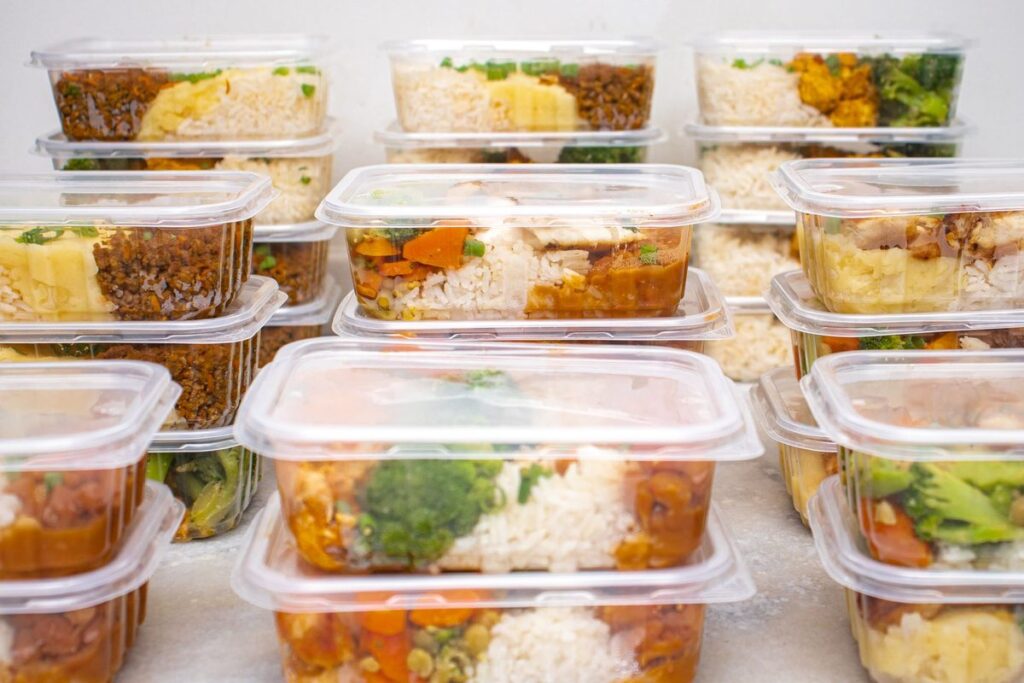
Want to take it further? Our guides cover planning healthy meal prep for the week, planning weekly meals on a budget, making a healthy shopping list and understanding food labels. Trying plant-based eating? See our Veganuary meal plan guide.
If someone has an allergy or intolerance
AI can suggest recipes without certain ingredients, but it can miss hidden allergens, and it doesn’t know what’s in the specific product on your shelf. Always read the label on the actual packet, and treat AI recipes as ideas rather than safety advice. Our guide to cooking for allergies and intolerances shows how to do this carefully.
A word on weight loss and restrictive diets
If you ask, AI may produce very low-calorie plans or extreme “detox” ideas without much warning. Don’t follow them. If you want to lose weight, are thinking about a big change in your diet, or have a health condition such as diabetes, speak to your GP or practice nurse first. And if your relationship with food is causing you worry, talk to a GP rather than a chatbot.
Sleep better with a simple routine
The NHS says adults need 7 to 9 hours on average, though everyone is different. Its self-help advice for insomnia includes waking up and getting out of bed at the same time every day, relaxing for at least an hour before bed, keeping your bedroom dark and quiet, and exercising regularly during the day.
AI can help you turn that advice into a routine that fits your evenings.
Prompt: A wind-down routine for my evenings
I usually go to bed around [time] and need to get up at [time].
My evenings look like this: [e.g. kids to bed at 8, then laptop and TV until late].
Things that might be affecting my sleep: [e.g. coffee after 3pm, scrolling in bed, a noisy street].
Suggest a realistic wind-down routine for the last hour before bed, with 3 small changes I can try this week.
Give me a simple way to track whether it's helping over 2 weeks.
Our full guide to building a better sleep routine has more detail. One important line: if poor sleep has gone on for months, or you’re constantly tired despite changing your habits, see your GP. Long-term tiredness can have medical causes that AI can’t spot.
Stress, mood and healthy habits
The NHS’s 10 stress busters include being active, taking control of what you can, connecting with people and making time for yourself. It also notes that exercise won’t make stress disappear, but can reduce some of the emotional intensity you’re feeling.
AI isn’t a therapist, but it can be a calm place to sort out your thoughts and plan small steps.
Prompt: Small habits for a stressful month
I'm feeling stressed mainly because of [e.g. work deadlines, money worries, Christmas plans].
I have about [minutes] a day for myself.
Suggest 5 small, practical habits I could try (no more than 10 minutes each), based on mainstream NHS-style advice such as being active, connecting with people and taking control of what I can.
Help me pick 2 to start with this week, and write a short check-in question I can answer each evening.
For more, read our guides to building habits that help you manage stress, tracking healthy habits and staying motivated and coping with Christmas stress. If you’d like to cut back on alcohol, there’s also a guide to planning a Dry January.
If you’re struggling: please don’t rely on a chatbot. The NHS says to get help from 111 online or call 111 and select the mental health option if you need urgent help, or ask for an urgent GP appointment. Call 999 or go to A&E if someone’s life is at risk or you don’t feel you can keep yourself safe. You can call Samaritans free, any time, on 116 123.
Get more from GP and physio appointments
Appointments can feel rushed, and it’s easy to forget the one thing you wanted to ask. AI won’t tell you what’s wrong, but it’s excellent at organising what you already know.
Prompt: Get ready for my GP appointment
I have a GP appointment about [problem, in general terms].
Here are my notes: [when it started, how often it happens, what makes it better or worse, anything I've tried].
Please do not suggest a diagnosis.
Turn my notes into a short, clear summary I can read out in under 2 minutes, then list the 3 most important questions to ask, and a space to write down what the doctor says.
You don’t need to give AI your name, date of birth or NHS number to do this, and you shouldn’t. Describe the problem in general terms, then add your personal details to the printed sheet afterwards. Our guides to preparing for a doctor’s appointment and preparing for a physiotherapy appointment walk you through it, including how to keep a simple symptom diary.
Where AI gets health and fitness wrong
AI makes mistakes, and in health those mistakes matter more. Here’s what to watch for.
It sounds confident even when it’s wrong
Chatbots write in a calm, authoritative style whether the answer is right or not. They can mix up conditions, give out-of-date advice or invent details. Treat any health fact as something to check on the NHS website.
It can’t diagnose you
Even if you describe your symptoms perfectly, AI can’t examine you or know your history. Never use it to decide whether something is “probably nothing”. If you’re worried about a symptom, use NHS 111 or speak to your GP.
Medicines and supplements
Don’t ask AI to work out doses, combine medicines or tell you whether you can stop taking something. A pharmacist or your GP is the right person to ask.
Plans that are too much, too soon
AI doesn’t see you get out of breath. If you don’t mention an injury, condition or pregnancy, it may give you a plan that’s too hard. Tell it about anything relevant, start gently, and stop if you feel pain, dizziness or chest discomfort.
Your privacy
Health information is personal. Avoid sharing your full name, date of birth, NHS number, address or photos of medical records. Check your AI app’s privacy or data settings, and keep descriptions general wherever you can.
When to stop asking AI and get real help
This is the most important section in the guide. Based on NHS advice:
- Call 999 in a medical emergency or if someone’s life is at risk.
- Use NHS 111 online (for people aged 5 and over) or call 111 if you need medical help now and aren’t sure where to go. Call 111 rather than going online if you need help for a child under 5.
- Speak to a pharmacist for advice on minor illnesses and medicines.
- Book with your GP for ongoing problems, before starting exercise if you haven’t been active for a long time or have a health condition, and for any symptom that worries you.
- Call Samaritans on 116 123, free and at any time, if you need someone to talk to.
Your simple weekly health routine with AI
You don’t need to talk to a chatbot every day. Ten minutes on a Sunday is plenty:
- Tell AI how last week went: what you managed, what you skipped and how you felt.
- Ask it to adjust this week’s activity plan, making it easier or harder as needed.
- Plan the week’s meals and shopping list in the same chat.
- Pick one small sleep or stress habit to focus on.
- Put everything into your calendar or on the fridge, so the plan leaves the chat.
Prompt: My Sunday health check-in
Here's how my week went: [activity done, meals, sleep, mood, anything that got in the way].
My plan for next week is: [paste last week's plan or describe it].
Please adjust next week's activity plan so it's realistic, suggest 4 simple dinners and a short shopping list, and pick one small sleep or stress habit for me to try.
Keep it short, encouraging and practical. If anything I've written sounds like it needs a doctor, tell me to speak to my GP or NHS 111 rather than giving medical advice.
Try it yourself with ChatGPT
Here's how my week went: [activity done, meals, sleep, mood, anything that got in the way].
My plan for next week is: [paste last week's plan or describe it].
Please adjust next week's activity plan so it's realistic, suggest 4 simple dinners and a short shopping list, and pick one small sleep or stress habit for me to try.
Keep it short, encouraging and practical. If anything I've written sounds like it needs a doctor, tell me to speak to my GP or NHS 111 rather than giving medical advice.
Which AI tools should you use?
- ChatGPT, Claude or Gemini for plans, meal ideas, explanations and appointment notes. The free versions are fine for everything in this guide. New to them? Our complete beginner’s guide to using AI in everyday life shows you how to get started.
- The NHS website and NHS App for checking health information and using 111 online.
- Free NHS apps such as Couch to 5K and Active 10 for guided running and brisk walking.
Planning meals and activities for the whole household? Our guide to AI for family life covers weekly plans, meals and chores for busy families.
Get the free AI Agents Playbook
50 practical AI workflows, plus one practical how-to a week in your inbox.
Free. No spam. Unsubscribe any time.
Related guides
- How to Use AI to Create a Workout Plan That Fits Your Life
- How to Use AI to Create a Step-Count and Walking Plan
- How to Use AI to Plan Healthy Meal Prep for the Week
- How to Use AI to Prepare for a Doctor’s Appointment
FAQ
Is it safe to ask AI about my health?
It’s fine for general information, planning and preparing questions, as long as you check anything important with the NHS website, a pharmacist or your GP. Don’t use AI to diagnose symptoms or make decisions about medicines.
Can AI make me a workout plan if I have an injury or health condition?
It can suggest gentle ideas if you tell it about your condition, but it can’t know what’s safe for you. Speak to your GP or physiotherapist first, then use AI to turn their advice into a weekly routine.
Do I need a paid AI app for health and fitness?
No. The free versions of ChatGPT, Claude and Gemini can do everything in this guide, and NHS apps such as Couch to 5K and Active 10 are free.
What should I do if AI’s advice worries me?
Don’t act on it. Check the NHS website or call NHS 111 for help, and call 999 in an emergency. If AI suggests something that contradicts what your doctor told you, follow your doctor.
Reference: NHS: Physical activity guidelines for adults aged 19 to 64, NHS: Physical activity guidelines for older adults, NHS: Walking for health, NHS: Get running with Couch to 5K, NHS: The Eatwell Guide, NHS: Insomnia, NHS: 10 stress busters, NHS: When to use NHS 111 online or call 111, NHS: Where to get urgent help for mental health, Samaritans: Contact a Samaritan